
Frequently asked questions
Have a question about training, licences, or the introductory flight? You'll likely find your answer below.
What age do I need to be to start pilot training?
To obtain the private licence, you must be at least 17 years old; for the professional licence, at least 18. You can start training earlier, but you must be at least 16 to make your first solo flight.
Is there a maximum age to learn to fly a helicopter?
For a private pilot, there is no legal age limit. The only requirement is passing the Class 2 medical examination and the mandatory annual check flight. We've trained pilots of all ages — passion has no age limit!
How long does the training take?
It depends on your availability to fly. We recommend at least 1 to 2 lessons per week. At that pace, training for a private licence takes between 9 and 12 months, and a professional licence between 6 and 10 months.
Do I need to go back to school to get a pilot licence?
Training for a private or professional licence consists of a theoretical part and a practical part. You can take the theory course with our school.
Can I train while working at the same time?
You can train alongside your professional life. You decide your own pace!
How do I sign up for training?
Get in touch by phone or directly through our contact form. If you'd prefer to meet one of our instructors first, we'll gladly arrange an appointment.
What's the best time of year to start training?
You can start whenever you like. Lessons run all year round. We recommend starting practical flying at the same time as the theory course.
How often do you recommend flying?
Weekly lessons are recommended. You can schedule your sessions with the instructor according to your availability.
Can I temporarily pause my training if I need to be away?
That's not a problem at all. Once you've passed the theory exam, you have 24 months to complete the practical training. Otherwise, you'll need to retake the theory exam. The same rules apply when transitioning to another helicopter type or training for a night rating.
How much does pilot training cost?
It depends on the helicopter type, how quickly you progress, your goals… We recommend contacting us so we can get to know you and give you accurate information.
Can I switch helicopter type during my training?
Yes, but you must show at least 35 flight hours on the aircraft type used for the practical exam. We recommend starting your training with an introductory flight, followed by a discussion with your instructor.
I already have aeroplane flying experience — can it count toward becoming a helicopter pilot?
Depending on your licence type and experience, you can credit 10% of your flight hours (up to a maximum of 6 hours) toward your PPL(H) training. You'll still need to complete the helicopter-specific subjects.
If I fly model helicopters, will that help with my pilot training?
Your knowledge of model helicopter flying will certainly be useful for both the theoretical and practical parts of your training.
Can I rent a helicopter once my training is complete?
You need a current type rating on the helicopter, as well as up-to-date club membership. Pilots who did not train with Rotor Club Aixois will need to complete a check flight with one of our instructors.
How long is my licence valid for?
The licence is valid for life. You must keep a current type rating on the aircraft and a valid medical certificate (Class 1 or 2).
How many flight hours per year do I need to maintain my licence or type rating?
To keep flying a given helicopter type, you must fly at least 2 hours and complete a check flight with an examiner. Each helicopter operator or flying club may also require additional hours depending on the aircraft you rent.
What is a type rating?
A type rating is a qualification on a specific helicopter type, which you must renew every year through a check with an examiner.
What is a medical certificate?
All pilots must hold a valid medical certificate to fly. Private pilots need a Class 2 certificate, valid for 5 years. Professional pilots need a Class 1 certificate, valid for 1 year.
Are language skills required?
English is very important in aviation. Aeronautical information and radiotelephony are mainly in French and English. For a professional licence, you must pass a language proficiency test, renewed every 4 years. For a private helicopter licence, this test is not required.
Can a helicopter introductory flight be given as a gift?
Yes! We offer personalised gift vouchers for an introductory flight. Ideal for a birthday, Father's Day, a retirement gift or a corporate event. Contact us directly to request one.
What's the difference between a "baptême de l'air" (joyride) and an introductory flight?
A "baptême de l'air" is a service reserved for public air transport companies: you're a passenger. An introductory flying lesson, like the one we offer at Rotor Club Aixois, goes much further: you actually take the controls of the helicopter, under the supervision of a certified instructor. It's a genuine first flying lesson, not just a ride.
What's the difference between aeroplane PPL and helicopter PPL training?
The aeroplane PPL (PPL-A) and the helicopter PPL (PPL-H) are two distinct licences. Helicopters require different coordination (three simultaneous controls instead of two) and greater attention during hover flight. If you already hold a PPL-A, you can benefit from a reduction of up to 6 hours on your PPL-H training.
Can an aeroplane pilot licence be converted into a helicopter licence?
There's no direct conversion, but a reduction is possible. Holders of an aeroplane PPL can credit 10% of their aeroplane flight hours (up to a maximum of 6 hours) toward PPL-H training. Shared theoretical subjects are also reduced.
What career paths are open after the PPL(H)?
The PPL(H) opens the door to many progressions: night VFR rating, instrument rating (IR(H)), and, if you want to fly professionally, the CPL(H) (Commercial Pilot Licence Helicopter). Some of our former students are now professional pilots with SAMU (emergency medical services), civil security, or VIP transport.
Can I fly if I wear glasses or contact lenses?
Yes, in the vast majority of cases. The Class 2 medical certificate allows glasses or contact lenses under certain conditions (sufficient corrected visual acuity). An approved aviation medical examiner (DGAC) will assess your situation during the medical exam.
Are there any grants or funding options for PPL(H) training?
PPL(H) training can, in some cases, be funded through the French Personal Training Account (CPF) if eligible, or through regional schemes. Some employers also fund training as part of skills development. Check with your OPCO and France Travail (the French employment agency) — feel free to contact us, we can point you in the right direction.
Does Rotor Club Aixois offer theory classes for the PPL(H)?
Yes, we support our students throughout their theory exam preparation. The theory course covers 9 modules (air law, meteorology, navigation, aircraft knowledge…) and can be prepared at your own pace, alongside your flying lessons. Resources and study materials are made available.
Can PPL(H) training be done on an accelerated schedule?
It's possible to intensify training by increasing the number of weekly lessons. However, a minimum amount of time is needed for skills to become firmly established — flying too fast can actually hurt your progress. We don't recommend more than 4-5 lessons per week. The legal minimum remains 45 flight hours, regardless of the pace chosen.
What is autorotation and why does it matter?
Autorotation is a helicopter's ability to land safely even after a complete engine failure, using the kinetic energy stored in the rotor blades. It's a fundamental manoeuvre in PPL(H) training that demonstrates the helicopter's inherent safety. It is systematically taught and assessed during the practical exam.
Can you fly a helicopter over the sea or the mountains from Aix-les-Milles?
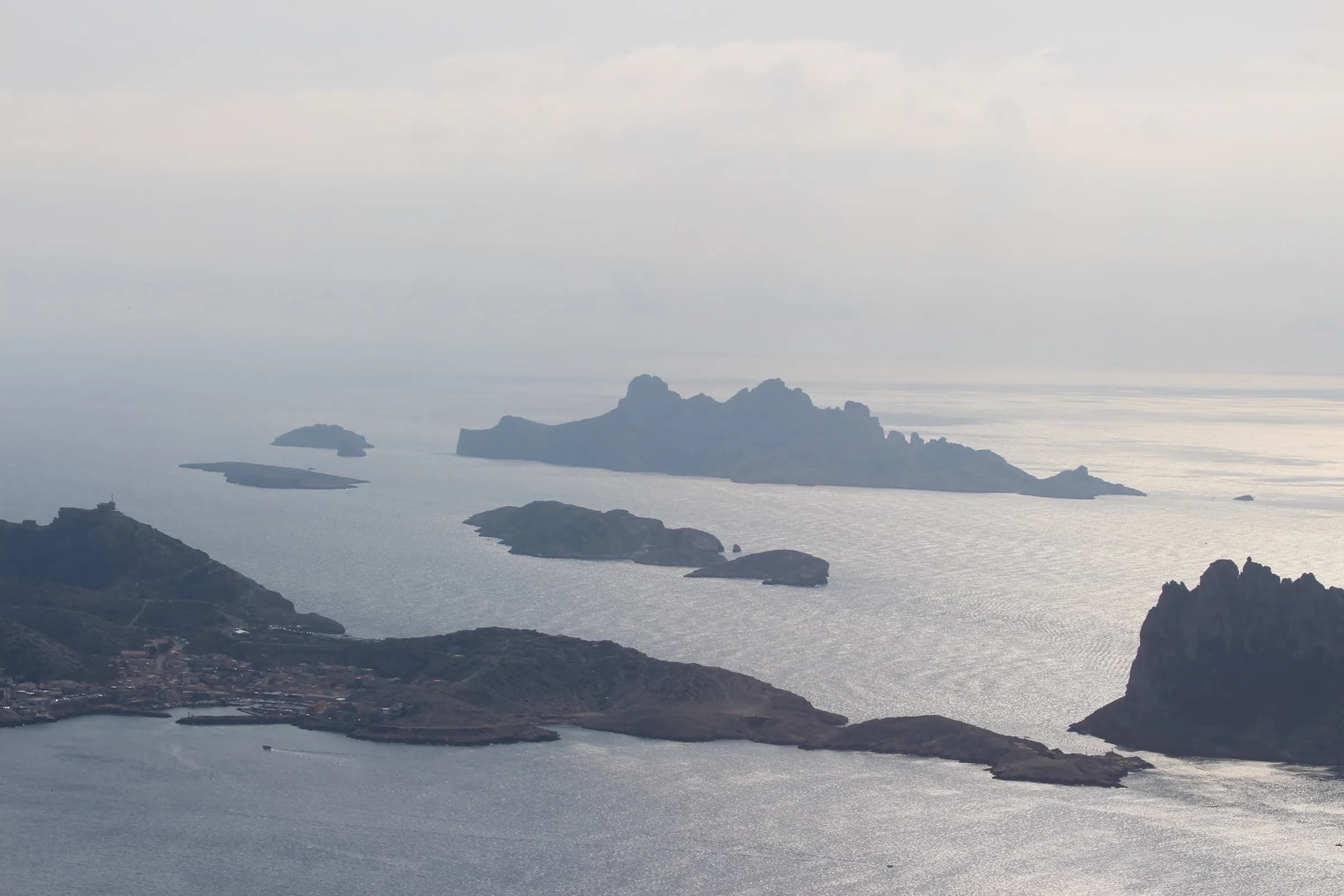
Yes! That's one of the great advantages of our location in Provence. From Aix-les-Milles aerodrome, you can fly over the Mediterranean coast, the Sainte-Victoire mountain, the Luberon, the Alpilles, or the Camargue. These varied environments naturally enrich the training and prepare you for all types of flying conditions.
What is DTO approval and why is it important?
The DTO (Declared Training Organisation) is an approval issued by the French Civil Aviation Authority (DGAC) that authorises an organisation to train private pilots. Without this approval, it's impossible to legally train students for the PPL(H) licence. Rotor Club Aixois holds this approval, guaranteeing that our training complies with current EASA European standards.
Is it dangerous to fly a helicopter?
No, provided training and regulations are followed. Helicopters have a unique built-in safety feature called autorotation, which allows a safe landing even after a complete engine failure — a manoeuvre systematically taught and assessed during PPL(H) training. As with any form of aviation training, safety mainly comes down to the quality of the training and strict adherence to procedures.
Can you get motion sickness in a helicopter?
It's possible, as with any mode of transport, but generally less common than in a light aeroplane: holding the controls yourself rather than just being a passenger noticeably reduces motion sickness, since anticipating the aircraft's movements helps you adapt to them.
Is there a maximum weight to fly or to be a passenger?
Yes, every helicopter has a maximum take-off weight that must be respected, which includes the weight of the pilot, passengers, fuel and luggage. There's no strict individual weight limit, but your instructor can tell you if a particular configuration (number of passengers, flight duration) requires adjusting the fuel load.
Do I need to be athletic or very fit to fly a helicopter?
No particular physical condition is required beyond passing the medical certificate (Class 2 for a private licence, Class 1 for a professional licence). Flying a helicopter mainly requires coordination and precision, rather than physical strength.
How long does it take to learn to hover?
Hovering is widely considered the trickiest skill for a student helicopter pilot to pick up — expect roughly 5 to 10 flight hours to grasp the basics, with progress varying from student to student. It's also one of the most rewarding skills once mastered!
Do I need a car driving licence to fly a helicopter?
No, a car driving licence isn't a prerequisite for obtaining a helicopter pilot licence. They're two entirely independent qualifications, issued by different authorities.
Can you fly a helicopter in any weather?
No, the PPL(H) training and flights we offer take place under visual flight rules (VFR), which require sufficient visibility and cloud ceiling. In poor weather, flights are systematically rescheduled — safety always comes before keeping to a schedule.
Still not sure? Take a look at our discovery flight, our PPL(H) training or our ratings for already-licensed pilots.